
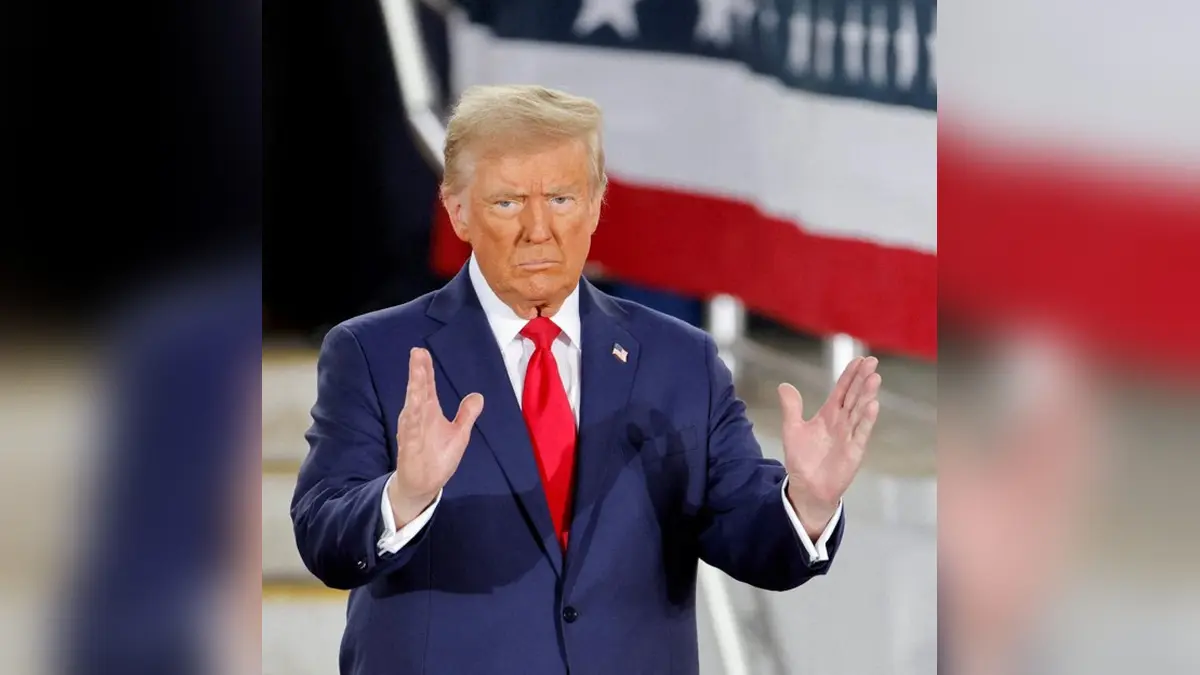
Donald Trump won the United States presidential election in 2024 and returned to power for a second term largely due to voter dissatisfaction with the economy, concerns over immigration, and shifts in the political landscape. Many voters felt the cost of living was too high and believed the national economy performed better during Trump’s first term than under the administration of Joe Biden and Kamala Harris. Another factor driving Trump’s victory second time was public anxiety regarding high levels of illegal border crossings and security at the southern border became a central issue that drove voter support toward Trump’s strict enforcement promises. And another event that played a major role in his re-election was late withdrawal of Joe Biden from the presidential race. This left Kamala Harris with a compressed timeframe of just over 100 days to build a national alternative campaign, making it difficult to distance the incumbent administration from public grievances.
However, in recent times Donald Trump has seen massive erosion in his approval rating. According to a Reuters/Ipsos poll, Donald Trump’s overall presidential approval rating fell to a record-low 32% in September 2026. Data compiled by The Economist’s approval tracker and reported by The Hill show that this drop comes as voters grow frustrated with economic pressures and foreign policy decisions. Polling experts from Ipsos state that high inflation, rising prices, and living costs are major reasons for the drop. Only about 32% of voters approve of how Donald Trump handles the economy. Another important reason for decline in Trump’s approval ratings is public dissatisfaction with the military involvement in Iran which has increased financial burdens and lowered enthusiasm among voters. Last but not the least approval among registered Republicans also slipped from over 85% earlier in the year down to the 73%–78% range in recent polls.
As a result, analysts expect that low approval ratings for Donald Trump could create a difficult political environment for Republicans heading into the November 3 midterm elections. Otherwise also Donald Trump’s inclination to run the country more on the basis of executive orders rather than Congressional approvals is highly questioned by experts as throttling democratic checks and balances. It is alleged that Donald Trump issued a high number of executive directives upon taking office, touching on immigration, deregulation, and agency oversight, leading to widespread legal challenges in federal district courts. Many of his executive orders have been questioned in the Supreme and lower courts. However, there is no comprehensive or official statistical percentage tracking the exact proportion of Donald Trump’s executive orders rejected by the U.S. Supreme Court, as most challenges remain ongoing or wind through lower courts.
It is also notable that more than 180 university and college presidents signed joint statements denouncing the Trump administration for “unprecedented government overreach and political interference”. In response, White House representatives—such as spokeswoman Karoline Leavitt—stated that institutions like Harvard risked their own funding by failing to obey federal law. Us’ democratic credentials are also being questioned for some regressive policy measures. The administration has targeted Diversity, Equity, and Inclusion (DEI) programs and sought extra admissions data to ensure race-based preferences are eliminated, threatening institutions’ tax-exempt status. Universities argue this is an infringement on academic freedom. quite contrary to liberal traditions of US democracy, the current US administration launched civil rights investigations accusing several schools of mishandling pro-Palestinian protests and failing to protect Jewish students, while also freezing or threatening research grants.
Another criticism of Donald Trump is about his approach towards free media. He has publicly targeted and restricted several media organizations that he labels as “fake news” or accuses of unfavorable coverage. He recently banned media outlets like CNN , MS NOW in September 2026 for alleged unfavorable reporting. and Politico restricted from White House access in the same directive. He has also also Indefinitely banned the Associated Press from pooled press events in the Oval Office and aboard Air Force One over terminology disputes.
All these criticisms have together eroded Donald Trump’s approval rating and there is no sign of any immediate recovery in it. The US is a global power not only because of its high GDP and strong military and technology, but also as a beacon of liberal democracy and promoter of global peace and prosperity. The transactional approach of Donald Trump is in collision with true DNA of US democracy, a proposition with which many can disagee, yet this is true.