
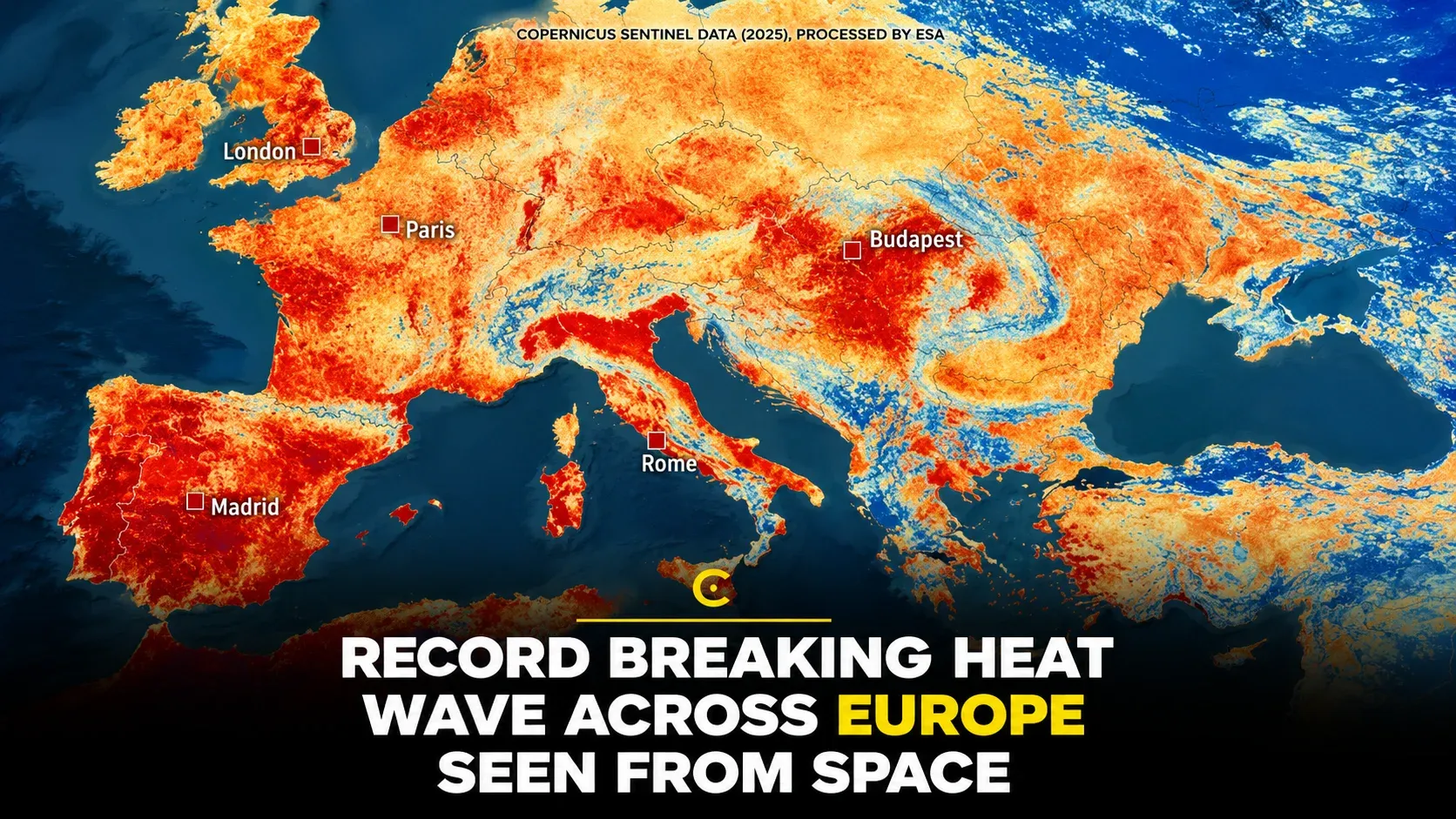
Europe and America are witnessing severe heat waves causing thousands of heat related deaths in recent times besides inhospitable living conditions and forest fires. Provisional figures from Spain and France show that about 1,000 people lost their lives in each country because of the extreme heat. Although a final toll has not yet been released, it is estimated that deaths in June have been much higher than previous months. In Paris region the recorded figure of death last year at 5,700 although remained lower than15,000 recorded in 2003, the current spike in heatwaves is being seen as a warning sign about worsening climate change including erratic weather conditions. Such a situation is emerging due to a combination of factors including various anthropogenic interference in the nature’s cycle in search of higher growth and increased consumption. Due to rising temperature the need for SOS Medicines and hospitalization increased in these regions apart from rising instances of stress and anxiety. At the same time while many people moved towards water bodies to cool their bodies by swimming, a large number of them lost their lives by accidental drowning.
The heatwave that started in Western Europe in early weeks of June has been the most severe ever recorded on the continent. The extreme heat created parched conditions in southern France, where firefighters are battling several wildfires that are being fanned by strong winds. Meanwhile, the return of high temperatures to the Paris region has led to sometimes violent competition to acquire air-conditioning units. Residents scrambled to get their hands on bargain air-cooling units before the next heatwave hit. Germany also experienced hottest-ever days with temperatures of about 41.7C in June. Besides, about 130 million people in central and Eastern Europe are reported to have experienced higher than usual temperatures. In Italy, 22 cities were placed under red heat warnings, as were several regions in Croatia, while the Balkans also remain under extreme heat. Wildfires have been reported in Croatia, Albania and Bosnia and Herzegovina. Europe’s deadly heatwave has broken records in the east of the continent, with Czechia and Slovakia and Hungary recording their highest-ever temperatures, and Ukraine ordering power cuts to deal with the strain. Most of these countries recorded about 40- 41 degrees Celsius (105.8 degrees Fahrenheit).
Most of the regions, mainly the central and eastern parts of US are also facing heatwaves. Power grid operators in the United States are warning that a dangerous heatwave could put more strain on an electric grid already under pressure from surging energy consumption. Further, there has been increasing pressure on electrical grids from new technology like data centres and electric vehicles.The heatwave is likely to continue through one of the busiest travel weekends of the year as millions of Americans would celebrate Saturday’s holiday (5th July) to mark the 250th anniversary of the US’s independence. Temperatures this week are forecasted to climb above 38 degrees Celsius (100 degrees Fahrenheit) from Boston to Washington, DC, pushing up demand for air conditioning.The extreme temperatures also come as the FIFA World Cup has reached the knockout stage, with many host cities, including New York, Boston, Philadelphia and Washington, expected to feel the heat.Humidity could push the heat index as high as 46 degrees Celsius (114 Fahrenheit) in some places, while overnight temperatures will offer little respite.
Experts say the artificial intelligence (AI) boom is also colliding with climate change, with tools like ChatGPT, Gemini and Claude being processed in vast, energy-hungry data centres. Many of those are concentrated in northern Virginia, which sits within PJM’s service territory and is widely described as the world’s largest data centre hub. Researchers have also identified what they call a “data heat island effect”, finding that land surface temperatures around AI data centres rise by an average of 2 degrees Celsius (3.6 degrees Fahrenheit), with some locations seeing increases of up to 9 degrees Celsius (16.2 degrees Fahrenheit).
The National Weather Service in the US warns that long periods of extreme heat create significant stress on the body. It has urged people to limit outdoor activity, stay hydrated and keep close to air conditioning or cooling centres. A 2024 report from the Journal of the American Medical Association (JAMA) found that 21,518 deaths in the United States from 1999 to 2023 were heat-related.The highest number came in the final year of the report’s analysis, 2023. That year, 2,325 people died from causes attributed to high temperatures.
Extreme heat is a genuinely dangerous phenomenon. Drought, wildfires, strain on electrical grids, and mounting death tolls have all made heat waves an increasingly common and destructive occurrence. In the past also heatwaves have occurred in various parts of the world , nut the lessons learnt have not been implemented in right earnest and urgency. Individualized responses from countries of the world will not be adequate to restore normal natural climatic and weather cycles. The irrational hankering for growth in the world should recall the warnings of the Club of Rome in their thesis of ‘ Limits to Growth.’ The United Nations Climatic Conventions and Millennium Development Goal/Sustainable Development Goals are the latest reminfers of the seriousness of the problem of climatic change. But only talks will not suffice, real collective actions is the demand of the hour. It is also needed to institutionalize the sustems of funding and technology transfers for mitigation, adaptation and transition to green growth on equitable and just terms.