
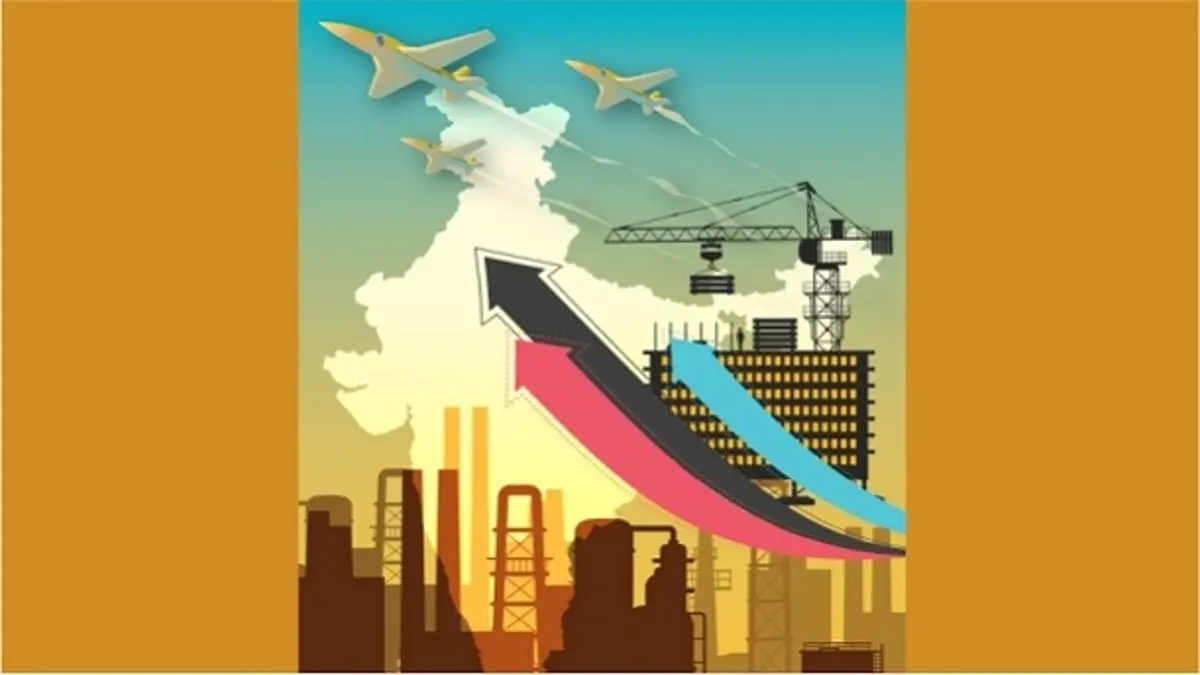
India marked its 80th Independence Day on August 15, 2026. It is an opportune moment to look back what we have achieved and what yet remains to be done. According tp convention the charismatic Prime Minister of India Narendra Modi hoisted the national flag and addressed the nation from the historic Red Fort in New Delhi. The core themes for the landmark anniversary were ‘150 Years of Vande Mataram’ and ‘Yuva Shakti for Viksit Bharat @2047’. There were some other remarkable features of the celebration. For example, it featured strictly indigenous and locally built military and operational equipment at the venue for the first time. While India is fast becoming attractive as an emerging market many western leaders including French President Emmanuel Macron and Russian President Vladimir Putin, extended official greetings and reaffirmed bilateral ties. For the citizens of a multi -lingual country this was great solace to hear PM’s address to nation in their own language (in over 22 regional languages) thanks to use of a real-time AI translation via Digital India Bhashini.
India as a vibrant democracy continuously for the last 80 years and of late the fasted growing emerging economy of the world has seen its own share of bad and good patches, but it has not just survived, but flourished in many ways. There are reasons for the citizens to have pride and glory in country’s achievements and be optimistic, but at the same time it is also important to appreciate that there are still many unfulfilled dreams under the famous tryst with destiny pledge at the time of independence. These moments like Independence Day celebration should be seen as an opportunity for honest soul searching as to what extent we have been able to realize collective dreams as a nation and what still remains to be done.
After facing about 250 years of drain of wealth during the imperialist regime, the Indian economy has nicely come out of vicious cycle of poverty and equality to a remarkable extent As of now ndia’s nominal GDP is approximately $3.92 trillion, ranking as the world’s 6th-largest economy. On a purchasing power parity (PPP) basis, it reaches roughly $18.90 trillion, making it the 3rd-largest economy globally. It has not happened without blood, sweat and tears. How can India forget the famines of 1966-69 and stopping of wheat supply to it by the US on the pretext of India not supporting US’ Vietnam war. India responded like a great nation with adoption of new agricultural technology euphemistically known as Green Revolution. And today the country is generally self sufficient in foodgrains production. India also succeeded in addressing the issue of malnutrition and rural unemployment to a remarkable extent with a successful cooperative milk movement known as Amul which helped the country to become the largest milk producer in the world through a programme known as operation flood. Then again the testing times came during late 1980s and early 1990s when India faced an unprecedented balance of payments crisis and came on the verge of default. it responded like a resilient and agile country, embraced New Economic Policy in 1991. The rest is a proud history of course correction and coming out of the crisis with flying colours. The country also navigated through the turbulent and dangerous period of COVID-19 during 2020-22 and now doing a good job in turbulent geo-political times especially the Gulf war in particular since 2025 and uncertain economic policy stances of Trump 2.0 regime.
Amid all such challenges, the macro-economic indices are keeping reasonably well. India remains the world’s fastest-growing major economy, posting a real GDP growth of 7.83% year-over-year for Q4 FY2026. While navigating global headwinds and energy shocks from geopolitical tensions, the country maintains robust foreign exchange reserves at roughly $692.87 billion and a controlled CPI inflation rate of 4.45%. Strong domestic demand and public capital expenditure continue to anchor economic momentum. Manufacturing and services sectors show ongoing expansion, keeping real gross value added resilient. Supported by strong service exports and steady capital inflows, external fundamentals remain solid despite a widening merchandise trade deficit. Agencies like Deloitte project a modest full-year growth rate around 6.5% to 6.8%.
However, the above description does not mean that all is well and India has achieved its potential. The country is still facing major challenges including high youth unemployment, lagging private sector investment, persistent income inequality, and vulnerability to global trade and currency shocks that pressure the rupee and foreign exchange reserves. Notably
over 80% of the country’s unemployed are young people aged 15 to 29. Further a major part of workforce remains stuck in unpaid family labor or low-productivity agriculture. Unemployment is also structural in nature as there is a gap between formal education and modern industry needs.
There are growth constraints in the industrial sector as well. Corporate capital expenditure has slowed as weak domestic demand leaves factories with excess capacity. Further, micro, small and medium enterprises (MSMEs) struggle to access affordable credit. The sector is also facing regulatory hurdles including problems in acquiring land and navigating state agencies which eventually prohibit investors. The country is also facing currency volatility as global uncertainties and import demands have driven sharp depreciation risks for the Indian rupee. Despite ongoing efforts for self reliance, the country still depends on imports for critical inputs, energy, and advanced technology. Such dependence strains the balance of payments. On the fiscal front also there are difficulties. High subsidy burdens and spending on essential inputs challenge government efforts to balance growth support with fiscal consolidation.
There are inefficiencies in the institutional structure as well. The institutional reforms generate trust and confidence among both citizens and investors. There should be conscious, transparent, accountable and visible measures demonstrating government’s resolve and commitment to rule of the law, meritocracy and good governance. In final assessment the performance of our country is reasonably good, but still we have miles to go.