
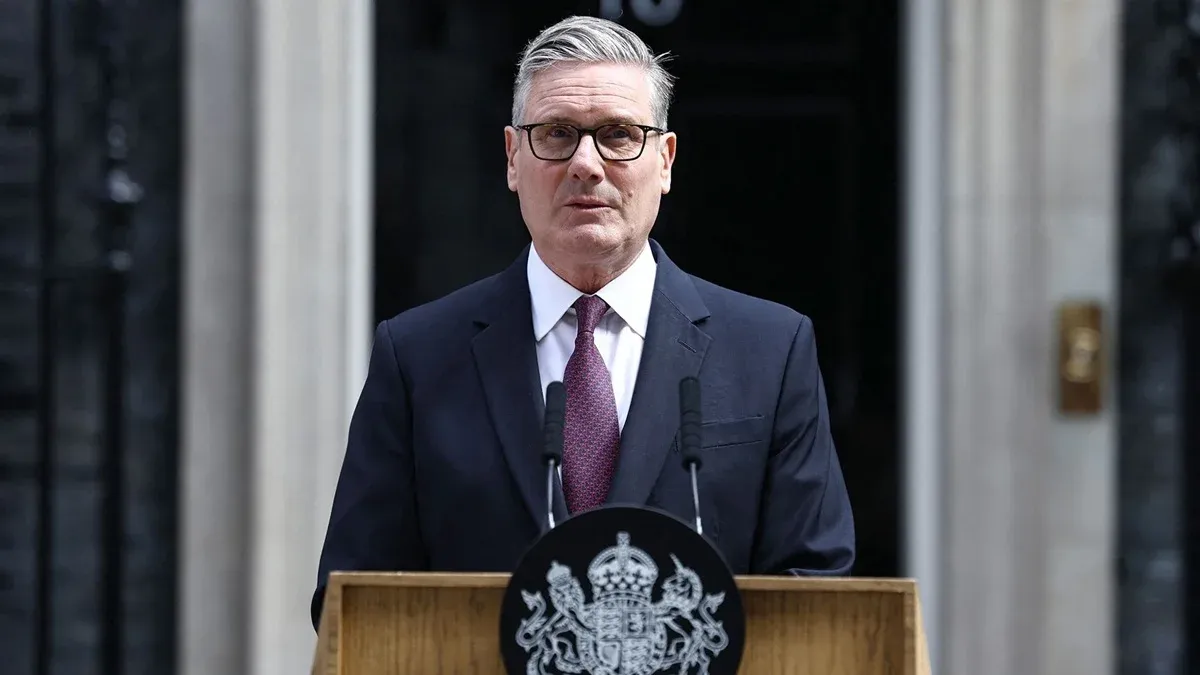
British Prime Minister Keir Starmer resigned (June 22, 2026) after losing the support of the majority of his parliamentary party. His decision was triggered by plummeting poll ratings, a collapse in popularity since his 2024 landslide victory, heavy losses in local and regional elections, and damaging political missteps, including his controversial appointment of Peter Mandelson as UK ambassador to the United States.
The man who had led Labour party in a landslide victory in July 2024 was able to fuel the growth momentum of the UK economy with notable improvement in some economic parameters in the last two years, but resigned after he lost confidence of majority of MPs. . During his time the UK economy was able to achieve the strongest economic growth in Q1 2026 relative to its G7 peers and managed inflation to decline to the Bank of England’s target level of 2%, apart from reducing the waitlists for medical appointments in the U.K.’s universal healthcare system. He also got marginal success in containing net immigration numbers.
The recent electoral losses for Labour and fears around the growth in Reform were the prime reasons he lost popularity within the Labour Party, with a historically low performance in opinion polls. He was also criticized for poor judgement calls in political appointments by his own party leaders and other hard right parties. All this compelled him to resign. Now Labour Party would elect a new leader. So far Labour’s ‘King of the North’, former mayor of Greater Manchester, Andy Burnham who recently won a seat in Westminster (the U.K.’s Parliament) in a bye-election is being seen as the most important contender for the leadership post. Earlier, the former Health Secretary was considered a major rival, but he stepped aside following Starmer’s resignation to publicly back Burnham’s leadership bid. Other potential contenders include Ed Miliband and Shabana Mahmood: having support of different wings of the party.
In a notable development, Andy outlined a 10-year missionin a recent major policy speech to reverse economic stagnation and rebalance the UK from the bottom up. Promising the biggest shift of power in modern times, his core proposals include decentralizing government budgets, establishing a “No 10 North” office in Manchester, launching a major social housing drive, and reforming essential utilities. The speech focused heavily on localism and decentralization, emphasizing that the UK’s growth cannot be ordered from Whitehall but must be nurtured from the regions. He also pledged to keep financial risks low by strictly adhering to current fiscal rules while still pursuing local-level regeneration besides focusing on re-industrialization, the regeneration of local places, and lowering property taxes (like business rates) for high street shops and pubs and proposing giving regional mayors and local authorities far greater control over money and public services. He also expressed intent to develop employment support and welfare management away from the central Department for Work and Pensions (DWP) to local providers. He also promised providing mayors with more power and resources to drive what he termed the largest social housing construction program since World War II. Although his promises appear great, if he is elected as the new leader, it will not be easy to implement them.
Nominations for election of the new Labour leader are scheduled to open on 9 July and close on 16 July, with a leader to be elected by 29 August if a contested election is held. Burnham is currently the only MP to announce his candidacy for the leadership contest. Burnham is widely seen as Starmer’s likely successor; he is the only declared candidate so far, he has received a large number of endorsements from his part. Al Carns, who seen as a potential contender, has not ruled out his candidacy.The leadership election will be the third held while the Labour Party is in government, the last two being in 1976 and 2007. Burnham previously stood in the 2010 and 2015 leadership elections.