
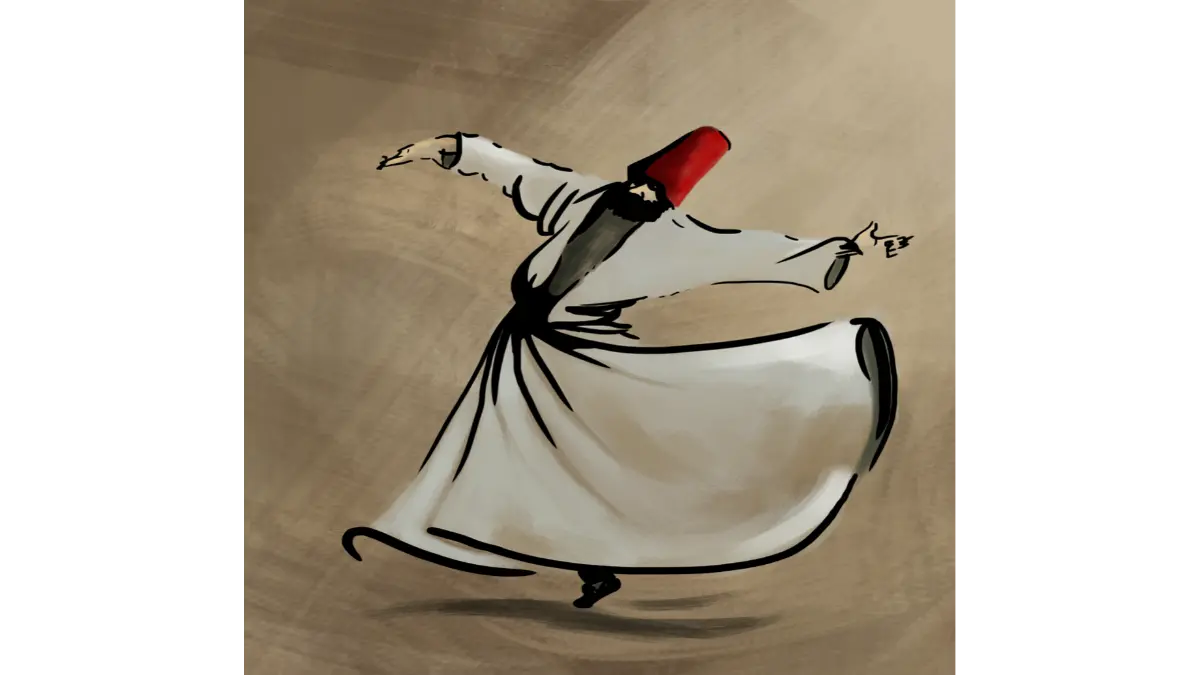
The religions usually seek separate identity through their own beleief systems and rituals. But there have been movements in history which aim at pure spiritualism that seeks unity, convergence and universal values for humanity. The sufi movement is one of such movements. It is the mystical and ascetic dimension of Islam where practitioners seek a direct, personal experience of God through inner purity, love, and spiritual devotion rather than relying solely on rigid legalism or external rituals.
Purpose of the Sufi Movement
Direct Communion with God: To move past formal religious dogmas and experience an intimate, loving union (often described as fana, or the annihilation of the ego) with the Divine.
Self-Purification (Tazkiya): To fight the lower self (nafs) and cultivate spiritual traits like humility, patience, and compassion through regular remembrance of God (dhikr).
Service to Mankind: To view service to humanity as the highest form of devotion to God.
Promoting Social and Religious Harmony: To bridge divides across different faiths, castes, and communities through the message of universal brotherhood (sulh-i-kul) and love.
Core Features and Traditions
Spiritual Lineages (Silsilahs): Sufis organize themselves into spiritual orders led by a master teacher (pir, shaikh, or murshid) who guides disciples (murids).
Hospices (Khanqahs): Open communal lodges where seekers, regardless of background, can find shelter, food, and spiritual guidance.
Music and Ecstasy (Sama): The use of devotional poetry and music—such as qawwali—to attain a state of spiritual awakening and closeness to God.
Major Orders: Notable historical orders include the liberal Chishti order (known for rejecting state patronage), the Suhrawardi order, the Qadiri order, and the more orthodox Naqshbandi order.
One of the most liberal and influential sufi orders is Chishti order within the mystical tradition of Sunni Islam. The order was founded around 930 CE in Chisht, a small town near Herat in modern-day western Afghanistan, by Abu Ishaq Shami (“the Syrian”). The order was brought to the Indian subcontinent in the 12th century by Khwaja Moinuddin Chishti, who eventually settled in Ajmer, Rajasthan. Prominent later saints in the lineage included Qutbuddin Bakhtiar Kaki, Baba Farid, and Nizamuddin Auliya.
The Chishtis emphasized universal love, peace, religious tolerance, and openness toward people of all backgrounds. The Chishtis were pioneers in using spiritual music (Sama) and devotional Qawwali to draw the human soul closer to the divine. Notably the members of Chishti order lived a simple, austere life, refusing favors or financial gifts from royal authorities to remain close to the common people. They are also known for organizing community Kitchens (Langars): Their hospice centers (khanqahs) relied on unasked-for public donations (futuh) to run open community kitchens that fed travelers and the poor alike.
Here is a list of some great Sufis of India:
Chishti Order
Moinuddin Chishti (1141–1230): Founder of the Chishti Order in India, who settled in Ajmer. Known affectionately as Garib Nawaz (Benef
Qutbuddin Bakhtiar Kaki (1173–1235): A prominent disciple of Moinuddin Chishti who lived and preached in Delh actor of the Poor), his dargah is a major pilgrimage center.
Baba Fariduddin Ganjshakar (1188–1280): Famed for his poetic verses, some of which are later included in the Guru Granth Sahib. He resided mainly in Pakpattan.
Nizamuddin Auliya (1238–1325): One of the most famous Chishti saints of Delhi, whose Nizamuddin Dargah remains a vital center of spiritual devotion and Qawwali music.
Amir Khusrau (1252–1325): A devoted disciple of Nizamuddin Auliya, celebrated as a master poet, musician, and pioneer of the Qawwali and Hindawi literary traditions.
Suhrawardi & Firdausi Orders
Bahauddin Zakariya (1170–1267): Established the Suhrawardi Order in Multan, taking a more active role in public and civic life compared to the austere Chishti saints
Shaikh Sharfuddin Yahya Maneri: A leading figure of the Firdausi Order (a branch of the Suhrawardi order rooted in Bihar/Rajgir) known for his profound mystical letters (Maktubat)
Qadiri Order
Abdul Qadir Jilani (1077–1166): The foundational figure of the Qadiri Order, whose spiritual lineage heavily influenced practitioners across North India, the Punjab, and the Deccan.
Mian Mir (1550–1635): A prominent Qadiri saint based in Lahore/Punjab, widely respected for his interfaith dialogues and close friendship with Guru Arjan Dev.
Dara Shikoh (1615–1659): The Mughal prince and Qadiri Sufi who translated the Upanishads and championed the philosophy of Wahdat al-Wajud (Unity of Being).
Naqshbandi Order
Ahmad Sirhindi (1564–1624): A central reformer of the Naqshbandi Order in India who emphasized strict adherence to Islamic law (Shariat) and introduced the concept of Wahdat al-Shuhud
Rishi Order (Kashmir)
Shaikh Nuruddin Wali / Nund Rishi (1377–1438): The founder of the indigenous Rishi Order in Kashmir, who beautifully wove together Islamic mysticism and local Kashmiri Shaivite bhakti traditions
Assessment
It is notable that the Bhakti and Sufi movements converged in medieval India to create a shared, syncretic culture of love, personal devotion, and social harmony. Both traditions bypassed ritualistic priesthoods, empty ceremonies, and rigid orthodoxy in favor of a direct, heartfelt relationship with the divine. Besides, they championed human equality and stood against social stratification, with Sufism promoting sulh-i-kul (peace with all/universal tolerance) and Bhakti challenging caste hierarchies. There were other similarities as well. Both utilized vernacular expression and music—such as Hindu bhajans, Sikh kirtans, and Sufi qawwali—to transcend intellectual barriers and experience spiritual ecstasy. Instead of relying exclusively on Sanskrit or Arabic, saints and mystics composed in regional languages like Hindi, Punjabi, Marathi, and Bengali, making spiritual wisdom accessible to ordinary people. The traditions of Bhakti and Sufi movements at lsater stage sought synthesis. Prominent medieval reformers like Kabir and Guru Nanak blended Islamic mystical elements with indigenous Hindu philosophy, creating a bridge between communities.
At a time when materialism, consumerism and competition are at their peak, these great movements still offer a way to contentment and peace based on love and other human virtues. Their emphasis is more on the principle of “live and let live” (mutual coexistence) rather than establish their uniqueness (exclusivity) and dominance. Their notion of god is also different in which s/he is accessible directly by the devotee without any intermediary. Their emphasis is on unity rather than divisiveness. At a time when societies are getting polarized, it is very important to propagate the ideas of these spiritual orders.